Highest listed tier
8 named SpritesMythic
Mythic is the highest game rarity represented in the current collection data. Zero Point and Burnt Peanut occupy this tier, but tier alone does not reveal exact drop odds.
 Fortnite Sprite Tracker
This Fortnite Sprite rarity guide separates the formal Rare, Epic, Legendary, and Mythic tiers from real-world collection scarcity. Compare every named Sprite, understand why exact drop odds matter, and see which companion is the strongest current candidate for the rarest Sprite in Fortnite.
A Fortnite Sprite rarity label describes a formal category. It does not automatically provide a numerical probability, total ownership count, or guarantee that every Mythic collectible is harder to obtain than every Legendary collectible in the current season.
The chart orders formal tiers from highest to lowest and calculates each total directly from the site dataset. Availability and source notes remain visible because they can change practical difficulty.
Mythic is the highest game rarity represented in the current collection data. Zero Point and Burnt Peanut occupy this tier, but tier alone does not reveal exact drop odds.
Dream, Punk, Boss, Grim Reaper, and Seven are listed as Legendary. Individual acquisition methods and current availability still affect practical scarcity.
Duck, Ghost, Demon, King, Aura, Striker, and Air are listed as Epic. This is the largest named tier in the present directory.
Water, Earth, Fire, and Fishy are listed as Rare. “Rare” is a formal tier name, not proof that every higher-tier treatment is harder to own.
Choose the evidence signals that matter to your question. Scores organize the verified directory; they are not official drop percentages.

Relic Chests and other extremely rare sources.
1 tracked treatment · evidence score 17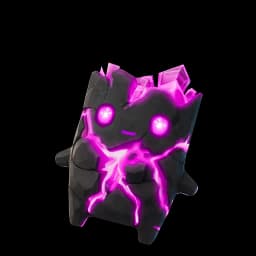
Vault, keycard and eligible Sprite Chests.
8 tracked treatments · evidence score 15
Relic Chests.
1 tracked treatment · evidence score 14
Sprite Chests and Rare Chests.
1 tracked treatment · evidence score 12
Sprite Chests and Rare Chests.
1 tracked treatment · evidence score 12
Burnt Peanut is the strongest rarest-Sprite candidate in the present directory. Its record combines the highest formal tier, a Relic Chest source described as extremely rare, and only one listed collectible treatment. Those signals make it a more defensible answer than choosing a name solely because it is Mythic.
That conclusion has an important limit: the dataset does not contain a complete official table of exact Sprite drop percentages or global player ownership. The answer therefore describes practical scarcity supported by current acquisition notes, not an official promise that Burnt Peanut has the lowest probability in every playlist, patch, region, or future season.
Zero Point is also Mythic and can require Vault or keycard Sprite Chests, but it has six tracked treatments and a clearer repeatable source category. Dream and Punk are Legendary rare-chest spawns; Boss requires a Boss defeat. Each can feel rarer to an individual player depending on route, match conditions, and current availability.
The formal tier is the clearest starting point. The current Sprite collection uses Rare, Epic, Legendary, and Mythic. It provides a stable classification for a chart, but it is only one dimension. A tier name cannot be converted into an exact drop percentage without a reliable source.
For that reason, this page does not display invented “one in X” probabilities. Where Epic or a verified live source does not provide a number, the honest value is unknown.
A companion found in broad chest pools behaves differently from one tied to a Vault, keycard container, Boss defeat, soccer objective, night-time condition, or Relic Chest. A narrow source can create practical scarcity even before exact probability is known.
Route difficulty also matters. A repeatable source in a highly contested POI may be less accessible than its formal tier suggests, especially for players prioritizing extraction rather than early fights.
An obtainable Sprite and an unconfirmed or unavailable Sprite should not share one current-hunt ranking. Availability can change after updates, making old rarity charts misleading even when their tier labels remain historically correct.
This guide keeps release status beside every name. Air and Seven remain unconfirmed in the present dataset, so their tier placement is shown transparently without pretending they are verified current collection targets.
Normal, Gold, Gummy, Galaxy, Gem, Holofoil, and Quack are treatments tracked separately from the named companion. A rare treatment can be difficult to complete even when the underlying named Sprite belongs to a lower formal tier.
A useful Fortnite Sprite rarity chart must therefore say whether it ranks names or exact name-and-variant entries. This page ranks named tiers; the checklist tracks all supported combinations individually.
Community screenshots and collection posts can reveal that an entry feels uncommon, but they are not a representative ownership census. Highly engaged collectors are more likely to publish exceptional finds, producing a selection bias.
Without verified population data, “few screenshots” should remain a clue rather than a precise rank. This prevents hype from becoming false numerical certainty.
Fortnite is a live game. Sources, pools, events, and availability can change without changing every old article or image indexed by search engines. The review date is therefore part of the answer.
The Fortnite Sprite rarity data on this page is generated from the same versioned source used by the tracker and directory. Material changes should update the dataset and changelog together.
Variants change what a collector must find, but the site does not treat them as replacement formal tiers. If Water is listed as Rare, its Normal, Gold, Gummy, Galaxy, Gem, and Holofoil entries remain variants of a Rare named Sprite. The treatment can still be practically scarce, visually desirable, or difficult to complete.
This distinction prevents two common errors. First, it avoids calling every shiny treatment “Mythic” without evidence. Second, it prevents an all-Sprites count from mixing named companions with individual treatments. The directory currently contains 25 names and 117 name-and-variant entries.
For collection planning, track the exact combination you found. For broad comparison, use the named tier. When someone asks for the “rarest Sprite,” check whether they mean the rarest named companion, rarest variant, rarest currently available drop, or rarest item in their own missing list.
One list may sort formal tiers, another may rank estimated drop chance, and another may rank current obtainability. A fourth may count screenshots or marketplace interest. These are different metrics and should not be presented as one universal official order.
A chart can be accurate for the season in which it was published and wrong for today. Sources move, companions rotate, and event availability ends. Always compare the publication or review date before using an old image as a farming plan.
A named Sprite list and an 117-entry variant checklist have different denominators. Rankings become confusing when a guide compares a base name in one row with a special treatment in another without explaining the unit being ranked.
Cube Sprites are special treatments and current reports describe them as harder to find than standard treatments, but Epic has not published exact Cube drop percentages. Cube Grim Reaper is the strongest practical rarest-Cube candidate, while Boss and Batman also use restrictive encounter routes. See the complete Cube Sprite guide for all nine verified entries.
Burnt Peanut is the strongest practical rarest-Sprite candidate in the current verified directory because it is Mythic, has an extremely rare Relic Chest source, and has only one listed treatment. Exact official drop percentages are not published in the dataset, so this is an evidence-based assessment rather than a guaranteed global ranking.
The current directory uses four named tiers: Rare, Epic, Legendary, and Mythic. Mythic is the highest listed tier. Variant treatments such as Gold, Galaxy, Gem, Gummy, Holofoil, and Quack are separate collection attributes rather than additional rarity tiers.
Mythic is the higher formal tier, but practical collection scarcity also depends on availability, source conditions, event timing, and variant distribution. A temporarily unavailable Legendary entry may be harder to obtain now than an available Mythic entry.
Exact, complete drop percentages are not available in the verified site dataset. Avoid interpreting a community ranking or a rarity label as an official numerical probability unless a current Epic source explicitly supplies that number.
They create separately tracked collectible treatments, but they do not replace the named Sprite rarity shown in the directory. A Galaxy Water Sprite remains a Water Sprite whose listed tier is Rare.
Some charts rank the formal game tier, while others rank current obtainability, estimated drop chance, ownership count, or individual variants. They answer different questions and can produce different orders without one universal official percentage table.
The page uses the versioned Sprite dataset and displays its review date. Live availability and acquisition details should be rechecked after major Fortnite patches or season changes.
Looking specifically for the new treatment? Use the complete Cube Sprite rarity and location guide before choosing a route.
Open the private collection tracker to filter missing entries, mark Owned and Mastered progress, and build a next-match hunt plan.
Open Fortnite Sprite Tracker


